
 If you live in a generally warmer climate, you may run into small hive beetles. These pests are NOT indigenous to North America or Europe, and the European honey bees have some difficulty managing to keep their numbers under control in the hive. Hive beetles left unchecked will either cause your colony to abscond, or they will die as the beetles take over. Hive beetles are very unsanitary creatures and a bad infestation is usually accompanied by beetle slime, small maggots, and an awful smell. This particular pest is number one on my “Hit List” of pests. I’ve lost more bees to hive beetles than any other pest.
Part of the reason that honey bees have difficulty with the beetles is because they can’t kill them. Beetles have a hard shell, are much smaller and constantly run and hide on the bees. My bees have a gentle disposition for the most part, so if I take the cover off one of my hives, and they sting me and buzz loudly, the fist thing I notice is hive beetles. They’ll put the guard bees on high alert, and keep them in a more aggressive disposition. Get these beetles under control, and your bees will calm down too.
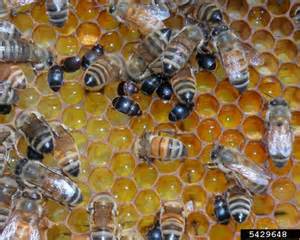
Fortunately controlling hive beetles is not very hard to do. The best way to keep them under control is with a strong colony of bees. If you’ve got lots of bees, you’ll almost never see beetles running around. They are far too outnumbered and the bees will easily keep them out for you. If you do happen to see a couple here or there, I like to make sure things stay in check by using beetle traps. If you make splits, you are temporarily weakened and beetles will use this opportunity to make a mess of your bee hive. I like the “Better Beetle Blaster” available at most bee supply companies. These traps sit in between the frames and the bees literally chase the beetles into the trap. Once they fall in, they can’t get out.

I know a lot of beekeepers will put some type of vegetable oil or mineral oil in the trap to drown the beetle. While this does work, it makes handling the trap a bit more difficult because you can spill the oil into the hive or get it on yourself. Another disadvantage of using oil is that it starts to go rancid especially after some beetles get trapped in it. The smell discourages other beetles from running into it after a while. I recommend using hydrolyzed lime dust (the stuff they line baseball fields with) instead because it is non toxic, and simply drys out the beetles when they fall in. There is never a bad odor and you won’t spill anything either. Another good choice is diatomaceous earth. This is just as effective as the hydrolyzed lime dust. Just fill your trap about 1/2 way with the dust and place 1 trap per every 8 frames in your hives for normal maintenance. For more aggressive control, use 2 traps per every 8 frames instead.

When you place your Beetle Blaster trap in between the frames, it is crucial that you push the trap down flush with the top of the frames. Do not leave any space between the trap and your frame, or the beetles will simply run and hide under the trap instead of running into it. I have found that if you keep your colonies strong you’ll have very little problem with the beetles. If you have just made some spits or have nucs that are still growing in numbers, it’s worth it to use the beetle traps. If you use them regularly you may never loose a colony to hive beetles.






9 Comments
We have recently had a problem with these beetles. I was unaware of the trap you mention. I will have to set one up and see how it works. Appreciate the heads up!
Where can hydrolyzed lime dust be purchased and does it have a different commercial name?
Great video, thanks. I believe pickling lime is the same thing as hydrolyzed lime, just food grade. Which can be purchased at some grocery stores or canning supply.
I just put in the beetle blaster yesterday.i used pickling lime from Walmart.today I counted 22 hive beetles in these traps,they,re awesome.
Enjoyed very much!
Very Informative.
Thanks so much
From Don
Just lost a colony to small hive beetles. They were a package with a package queen that we installed in a Warre’ hive on May 4th. The queen was not the best layer and after the hive beetles attacked it was a quick demise of the colony. Every hive purchase shipped to the southern US should include complementary SHB traps. We used swifter sheets which worked well, but it was too late.
In eastern NC the SHB’s are a nightmare. I’ve used beetle traps with apple cider vinegar + mineral oil; only a little success. I’ve taken to using Swifter pads and see lots of trapped/starved SHB’s on them. I think I’ll try the traps with Diatomaceous Earth and see how that goes. Using mineral oil is a real mess, no matter how careful I try to be.